"on my other laptop"…
That will be the sticking point.
The installation is always bound to the device.
Windows recognizes the completely different hardware and "thinks" possibly, it runs as an illegal copy. And then it either refuses to operate or asks for a fresh registration code.
How exactly Win10 behaves in this case, but I can't say exactly.
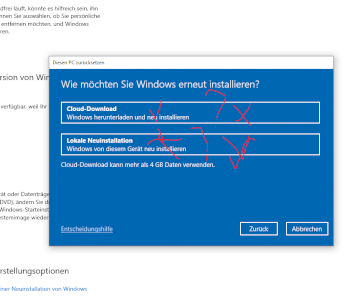
You have to repeat the installation on this notebook. Hopefully the old code will be accepted again.
Alternatively, build your old HD back into the notebook and the SSD you hang it via USB adapter.
Then you use a migration tool.
Some SSD manufacturers deliver something like this.
Otherwise, this (commercial) tool would be suitable:
https://www.paragon-software.com/de/home/migrate-os-to-ssd/
It is actually the program "Drive Copy Advanced". The big "partition manager" is much more extensive, but also much more expensive.
This also adjusts the Windows settings to SSD operation.
Then you can install the SSD again and hang the HD to the USB port. So you can then copy the required rest files.
I did this to myself (years ago) with WinXP and Win7.
With Win10 but it should be the same, because the software is constantly being developed.
You can also clone an HD to a SSD of at least the same size. But if the HD is bigger than the SSD, it will not work. And it brings with it other disadvantages. For example, The data occupancy on the SSD in the inappropriate structure of the HD.
So: Reinstall, or migrate the operating system by software.